Posts in the Clean category
Posted by Ronnie Humphries on 08 September, 2016
|
|
Read more →
We all want our ride to looks its best. One of the quickest and easiest ways to do this is by washing your vehicle on a consistent basis. Keeping your car clean helps to keep the finish looking new, and that helps to prevent damage from the elements. We'll outline how washing your car the right way makes life a little easier, giving you tips and tricks along the way.
Why Washing Your Car the Right Way is Important
Washing your car the right way is key to preventing swirl marks and extending the life of your paint. Those unsightly swirls are primarily left behind from grit embedding itself in the wash mitt or sponge during the washing process. The key here will be having an additional bucket filled with clean water, you’ll use this to rinse out your mitt before resudsing (a word we just made up).
Now that you know why you should wash your car the right way, let’s look at some easy steps to get that sucker clean and looking good on the road.
Set Up Your Vehicle to Be Washed
Find a cool/shady spot to wash your car. This will keep your car wash solution from drying car before it is rinsed off the car. Also, it is best to wash your vehicle on a calm day. Wind can stir up dust and grit that is attracted to wet surfaces, causing light scratches in the paint.
Begin the car wash process with two buckets. One is for your shampoo solution and the other is clean water to rinse your wash mitt. The majority to swirl marks are caused from grit (sand, dust, particles) embedded in the wash mitt . . . that’s why you’ll be rocking the second, clean bucket of water.
Use high quality car shampoos and wash mitts, your vehicle will thank you!
Fill a 5-gallon bucket ½ full with water. Add the correct amount of wash soap based upon label recommendations. Fill the bucket the rest of the way, agitating the water to fully activate suds. The second bucket will be filled with clean water for rinsing your wash mitt.
Pro Tip: Throw a Grit Guard into each bucket. This will allow the grit to settle on the bottom of the bucket, and not return to your wash mitt.
Pre- Rinse
Cool down the exterior of your vehicle by thoroughly rinsing the surface. This helps to remove the loose dirt and grime prior to washing.
Pro Tip: Use a high-pressure hose nozzle, or a pressure washer, to loosen and remove dirt from the wheels, wheel-wells, and undercarriage.
Wheels
Begin the washing process by cleaning the wheels, along with the wheel wells. This is because you should be using a wheel cleaner/degreaser, and want to be able to wash off any overspray that gets on the paint. It’s good to have a dedicated bucket, sponge, and brush for cleaning the wheels and surrounding area.
Rinse the wheel area. Spray on cleaner/degreaser to the rims and undercarriage. Agitate the areas with a wash mitt/soft brush. Then rinse off. Follow-up with rinsing the tire, applying cleaner to the tire, scrub/agitate with tire brush, and thoroughly rinse off.
Do one wheel at a time. You don’t want the soaps and chemicals to dry on to your rims during the process.
Pro Tip: Use a pump sprayer to easily apply the wheel cleaner/degreaser.
Washing your Vehicle
Now you are ready to wash your car! Load up that wash mitt with some car shampoo (from the sudsy bucket), and wring it out over the surface you are about to wash. This will loosen up the dirt on the surface, and act as a slick barrier to wash off the grime without scratching the paint.
Go small. Keeping the wash areas small allows you to rinse out the wash mitt frequently (in the clean bucket). Plus, it lessens the chance that the soap will dry prior to being rinsed off. After you have washed an area, give it a quick rinse to get rid of the left-over suds.
Always wash your vehicle from top to bottom (except for the wheels). The law of gravity says that the dirtiest areas of your vehicle will be those that are closest to the ground. You don’t want to compromise and scratch the rest of your paint by getting all that grit in your wash mitt.
Circles are out, straight lines are in. Wash in straight, overlapping lines. Remember to use both sides of your wash mitt.
When you get to the bumpers and rocker panels, inspect for bug and road splatter. Use a bug sponge and appropriate cleaner to remove any accumulated junk.
Pro Tip: Foam gun!
Final Rinse
Open up the hose nozzle completely, allowing the water to thoroughly rinse off all the suds. You should have gotten most of the suds off during some of the smaller rinses, but this allows for a final check to make sure you washed everything.
Pro Tip: Let the water sheet off the vehicle, which leaves less water drops behind, allowing the drying process to go quicker. Plus, this lessens the chance of water spots.
Drying Your Car
Start with a high-quality chamois. Gently dry the surface with straight, overlapping swipes. There is no need to apply a lot of pressure, you’re just taking off the majority of the water.
Pro Tip: Use a high quality, micro-fiber towel to remove any remaining droplets or streaks, completely drying the surface to avoid any water marks.
Troubleshooting Advice
Sometimes you run into some seriously nasty grime that doesn’t seem to want to dome off. Here are a few of the most common issues, and how to deal with them like a pro.
Heavy Bug Splat, Bird Droppings, and Tree Sap
-
Cool and rinse the surface with water.
-
Apply a bug remover or cleaner.
-
-
Rinse thoroughly.
-
Pro Tip: Clay Magic works wonders with fresh tree sap. Older, hardened tree sap can be removed with isopropyl alcohol.
Tar Deposits & Overspray on Fender Wells, Rocker Panels, and Wheels
-
First, remove dirt and any debris.
-
Apply an ample amount of solvent to the affected area.
-
Solvent cannot be shipped, but it is fairly inexpensive at a local hardware store.
-
Agitate area with a short brush or do-all scrubber.
-
Rinse and repeat as needed.
Pro Tip: Solvents work best on dry areas. Use a towel or fan to completely dry the area before applying.
Heavy Water Spots
-
Wash vehicle thoroughly.
-
Spray on water spot remover.
-
The majority of water spot removers are acid based, meaning they cannot be shipped.
-
-
Rinse thoroughly.
-
Re-wash vehicle with soap.
Pro Tip: Clay Magic works wonders on water spots, and removes the need to work with acid based chemicals.
Posted by Ronnie Humphries on 31 August, 2016
|
|
Read more →
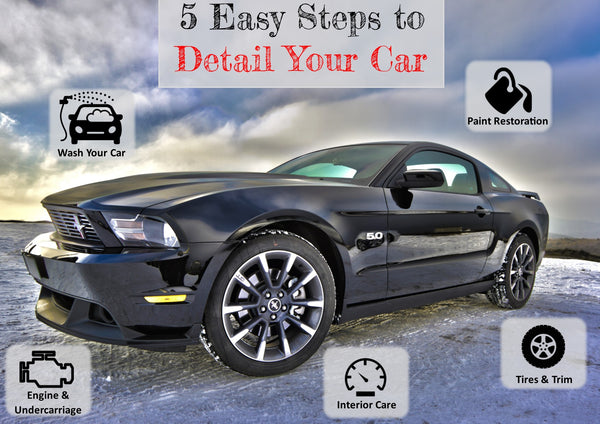
We all want our ride to look and perform its best. One of the simplest ways we can go about this is by keeping it, and all its parts, clean. Keeping your car clean helps keep the finish looking new, and will help to prevent damage from the elements. These are our five steps to detail your car.
Detail Your Car in Five Easy Steps
For those days that you want to forgo the professional detailer, and get your hands a little sudsy. Here’s the quick-and-easy on how you can go about getting your vehicle to look in tip top shape.
1. Exterior Prep and Clean
-
Try to wash your vehicle in a cool, shady spot. This helps to reduce the suds drying onto the paint.
-
Begin the car wash process with two buckets. One is for your shampoo solution and the other is clean water to rinse your wash mitt. The majority to swirl marks are caused from grit (sand, dust, particles) embedded in the wash mitt.
-
Fill your buckets. One with a high-quality car shampoo and the other with clean water.
-
Pro Tip: Throw a Grit Guard into the bottom of each bucket.
-
Thoroughly rinse the exterior surface of your vehicle. This will cool down the surface, while removing some the loose dirt and grime prior to washing.
-
Begin the washing process by cleaning the wheels, along with the wheel wells. This will allow you to wash off any of the chemical overspray from the paint.
-
Pro Tip: Use a pump sprayer to easily apply the wheel cleaner/degreaser.
-
Load up that wash mitt with some car shampoo (from the sudsy bucket), and wring it out over the surface you are about to wash.
-
Wash your vehicle from top to bottom (except for the wheels).
-
Wash in straight, overlapping lines, using both sides of your wash mitt.
-
Rinse each section once you have washed it. You don’t want the suds to dry on the paint.
-
Use a bug sponge and appropriate cleaner to remove any accumulated junk (i.e. bug splatter, overspray, road grime).
-
Thoroughly rinse off all the suds, allowing the water to sheet off the vehicle.
-
Use a high-quality chamois to gently dry the surface with straight, overlapping swipes.
-
Remove any remaining droplets or streaks with a micro-fiber towel.
2. Tires, Trim & Moldings
Clean and Preserve those Tires
-
Have a designated tire/wheel cleaner, as opposed to any household degreaser or cleaner.
-
You’ll also want a quality tire brush, along with a wheel brush based on the type of rims you have.
-
Pro Tip: Soak the brushes in wash solution to soften the bristles.
-
Thoroughly rinse the wheel and wheel-wells first.
-
Spray the wheel and tire down with cleaner and let set for a few minutes.
-
Clean the tires first, using the tire brush.
-
Next, use a wash mitt or wheel brush to clean the rims.
-
Pro Tip: A small brush works well to hit the nooks and crannies near the lug nuts.
-
Rinse thoroughly . . . repeat three more times.
-
Apply a quality dressing to preserve tires, while enhancing the look.
-
Pro Tip: Don’t over-apply the dressing, or it will ‘sling” on to the paint around the wheel-wells.
-
Check out this post if you need to polish those wheels.
Clean, Restore, and Protect the Trim & Moldings
-
The trim & moldings would have been cleaned during the wash process, but you a use little special cleaner and a brush to remove any stubborn grit and grime.
-
Rinse thoroughly and allow to dry.
-
To protect your freshly cleaned trim & moldings, apply either a water-based dressing, or Xtreme Shine.
-
A wax applicator can come in handy here.
-
If your plastic bits appear faded, you have a couple options:
-
For black, use Black Vinyl Coat to restore and preserve the trim.
-
For any other color, use Vinyl Magic.
-
Both products restore and preserve plastic pieces for up to 6 months.
3. Restore and Protect Your Vehicle’s Finish
-
Before you begin compounding or polishing your car’s paint, first prep the surface using Clay Magic.
-
Use a variable-speed orbital buffer when compounding/polishing your vehicle’s surface.
-
Pro Tip: Help avoid swirl marks by using a foam polishing pad to polish paint with a polisher.
-
Choose a polish or compound based on the condition of the paint.
-
Mild- Use a lightly abrasive polish like BC-2 for mild imperfections in the paint.
-
Medium- For heavier oxidation and swirl marks, use a more abrasive compound like GS-1.
-
Heavy- For heavy scratches (not to the metal) and paint defects or blemishes, use a heavy compound like XP Compound.
-
Polish small sections at a time, overlapping the sections to ensure complete coverage to finish the entire body panel.
-
Pro Tip: Don’t turn the polisher/buffer on until the pad is on directly on the paint.
-
Based upon the condition of your paint, you’ll step down to the next level of compound/polish.
-
Start with heavy compound, then move to a medium compound, followed up with a mild polish.
-
Pro Tip Make sure to remove any excess compound residue with a microfiber towel.
-
If the polish/compound did not contain a surface protectant, use a high-quality wax to give your paint a showroom shine.
4. Engine Compartment & Undercarriage Cleansing
Ungrime that Engine
-
Make sure engine is not hot, but warm to the touch.
-
Cover all electronics (distributor, sensors, wiring harnesses, etc.).
-
Soak engine and compartment with a degreaser, allow to sit for a few minutes.
-
Use a stiff brush to help remove the really baked-on stuff.
-
Using a controlled stream of water, rinse off the degreaser.
-
Allow to dry.
-
Apply water-based dressing to plastic housings, wires, and hoses.
-
-
Pro Tip: Use an aerosol detailer, like Platinum Shine, to add luster to any of the painted and metal surfaces.
Ungrit your Undercarriage
-
Elevate vehicle on jack stands, to get underneath.
-
Unless you have a monster truck, you my friend have it easy.
-
Use a pressure washer to blast off any and all debris that has accumulated under your vehicle.
-
Thoroughly coat undercarriage with degreaser, let sit for several minutes.
-
Use a brush to clean any heavily accumulated areas.
-
Rinse thoroughly, and allow to dry.
-
Add a protective barrier to your car’s bottom.
-
A rubberized undercoat is great for shielding your vehicle’s underbits from moisture and grime.
-
Pro Tip: You can also use a product like WD40 to help prevent corrosion on your car’s undercarriage.
5. Complete Interior Detail
-
Use a brush to get any embedded dirt out of the crevices.
-
Spray a multi-purpose cleaner, like Special Cleaner, onto all your hard surfaces (dashboard, door panels, door posts/jams, center console, etc.).
-
-
Pro Tip: Compressed air works great for cleaning out the vents.
-
To protect the hard surfaces from UV damage, use a product like Super Dress It.
-
Xtreme Shine works great for leaving a clean surface, without that slick feel. Its anti-static properties also repel dust.
-
Time to break out the vacuum.
-
Use a crevice attachment to remove the grit from those hard-to-reach areas.
-
Pro Tip: Lots of pet hair? Put on a latex glove and run your hand over the upholstery.
-
Use Super Foam to lift up any spots or stains on the carpet of upholstery.
-
Spray on.
-
Brush in.
-
Vacuum out.
-
Pro Tip: For specific stains (protein, oil, etc.) you can use and Enzyme based treatment.
-
Use Vinyl & Leather cleaner to remove any dirt from . . . you guessed it, vinyl and leather.
-
-
Apply your leather conditioner with a microfiber towel or a wax applicator.
-
Work the product into the leather, and wipe off any excess.
-
Pro Tip: Always use a quality conditioner with lanolin.
Liquid error (layout/theme line 149): Could not find asset snippets/spurit_uev-theme-snippet.liquid